
September 17, 2026
Embracing the Art of Curiosity
field notes
“I have no special talents. I am only passionately curious.”
– Albert Einstein
I have always loved this line from Albert Einstein, perhaps because it gives curiosity the importance I have always felt it deserved. We speak often about intelligence as though it were something fixed, a collection of facts gathered and abilities measured, but I have always been more interested in the appetite behind it. The wanting to know. The instinct to turn something over and look underneath it. The inability to walk past an interesting question simply because it has no practical use. Curiosity has been one of the great constants of my life, although for many years I did not always understand it as a strength. There were times when I tried to quiet it, hide it, or make it more acceptable. Now, I think of it differently. Curiosity is one of the ways I know I am fully awake to my own life.
The Questions We Learn to Hide
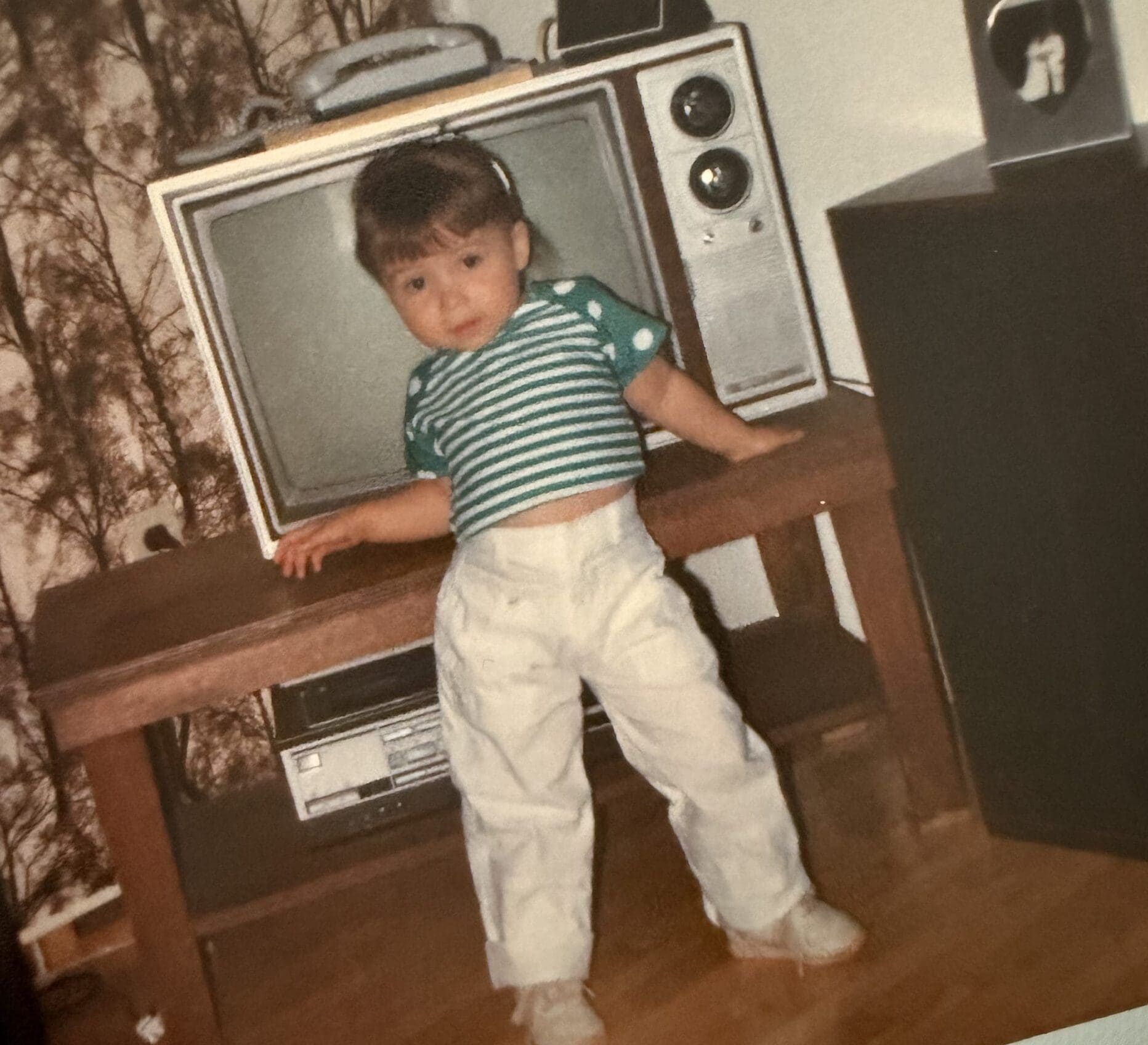
I was an intensely curious child. I read constantly, talked constantly, and asked questions about almost everything. Why was rarely the end of a conversation for me; it was usually the beginning of five more questions. Some adults understood this and encouraged it. They answered when they could, admitted when they could not, and sometimes helped me find out for myself. Others were less enthusiastic. There were teachers who found the talking and questioning distracting, and adults who eventually tired of having every explanation followed by another request to know more. Like many children, I slowly began to understand that curiosity is welcomed in certain rooms and inconvenient in others. There is a strange lesson hidden in that realization. We tell children that learning matters, yet we are not always very patient with the messy, persistent, sometimes exhausting curiosity from which real learning grows.
By high school, I had learned to soften that part of myself. At an age when belonging feels enormously important, I had somehow absorbed the idea that being visibly interested in things could make you seem uncool. Later, the insecurity changed shape. There were moments when I stopped asking questions because I worried that curiosity might be mistaken for ignorance. I thought that if I were knowledgeable enough, perhaps I should already know the answer. Looking back, I find that belief almost heartbreaking because it reverses the very thing that makes knowledge possible. The more we learn, the more clearly we can see the enormous perimeter of everything we do not know. Real curiosity requires enough humility to stand at that edge without embarrassment.
I do not think my curiosity ever disappeared. I simply learned to keep parts of it private. It returned to the surface when I became a mother, largely because children have a way of making the familiar strange again. They look at a world we have learned to move through automatically and refuse to accept that anything is ordinary. They want to know why the moon follows the car, where ants go when it rains, how a bird knows where to build a nest, why one word means what it means and another does not. Their imaginations are not yet disciplined by usefulness. They ask because the question itself is interesting. Watching my children encounter the world reminded me of how naturally I had once done the same. Their hunger for knowledge stirred my own, and I began allowing myself to follow questions again without first demanding that they lead somewhere productive.
That may be one of the greatest gifts curiosity has given me: a taste for life. I love new beginnings because they contain so much I do not yet know. I love entering a subject as a novice, discovering its language, finding the books that everyone in that world seems to have read, slowly recognizing patterns that were invisible to me a few weeks earlier. Even obstacles become more interesting when I look at them through curiosity. Failure does not feel quite so final when it can also be information. A wrong turn teaches me something about the landscape. An attempt that does not work still changes what I know. I have become much less interested in moving through life without mistakes and much more interested in remaining awake enough to learn from them.
A Personal Curriculum
Somewhere along the way, though, adulthood turns learning into a rather serious enterprise. We are encouraged to learn what will make us more employable, more productive, more informed, more impressive, or more efficient. Even hobbies are frequently asked to justify themselves by becoming income streams, expertise, credentials, or content. We seem to have developed an almost compulsive need to make our interests useful. I understand the impulse, but I think something beautiful is lost when every curiosity has to earn its place in our lives.
What if the thing you want to understand has no obvious application at all? What if you want to know why roses smell the way they do, or how many kinds of clouds exist, or why migrating birds return to the same places year after year? What if you become fascinated by old maps, medieval gardens, mushrooms, forgotten women in history, the architecture of libraries, constellations, perfume, moss, family recipes, or the particular wildflowers that grow along the road near your house? None of these subjects needs to improve your career or become part of a five-year plan. Wanting to know can be reason enough.
I have come to believe that one of the most wonderful things a person can give herself is a personal curriculum. Not the curriculum someone else decided was important, but a private and evolving education shaped by genuine fascination. There is something almost luxurious about choosing what you want to learn simply because it calls to you. Your curriculum may be inconsistent by traditional standards. It may wander from astronomy to poetry to gardening to psychology with no obvious thread connecting them. That does not make it frivolous. The thread may simply be you.
I sometimes wonder whether people who say they do not enjoy learning have actually been given too narrow a definition of the word. For many of us, learning became tangled with classrooms, deadlines, tests, performance, and being evaluated by someone else. We learned to associate knowledge with obligation. But long before there were grades or résumés, there was curiosity. Human beings watched the sky, studied plants, told stories, experimented, observed animals, invented tools, recorded patterns, and asked one another questions because understanding the world has always been part of being alive. Learning can still belong to us in that way.
Curiosity as Self-Knowledge
There is also, I think, a quiet relationship between curiosity and self-knowledge. We tend to think that knowing ourselves means identifying our values, strengths, personality, patterns, or ambitions, and of course all of those things matter. But knowing ourselves also means paying attention to what captures our interest. What makes us lean closer. What sends us looking for another book after we finish the first one. What we bring up in conversation without realizing how often we mention it. What we would gladly learn about even if no one were watching and there were no reward at the end.
We are surrounded by suggestions about what deserves our attention. There is always another subject we should understand, another conversation we should be following, another skill we should acquire, another area of life in which we are apparently falling behind. It can become surprisingly difficult to distinguish our own interests from the noise around us. Perhaps this is why curiosity can be a form of self-trust. When we allow ourselves to follow what genuinely fascinates us, especially when it seems too small, too strange, or too impractical to impress anyone else, we begin learning something about the shape of our own minds.
This is one of the reasons I do not want to become a finished person. I do not want to arrive at some imaginary point of adulthood where I have decided exactly who I am and what I believe and then spend the rest of my life defending that conclusion. I want to keep encountering ideas that make me reconsider what I thought I knew. I want books to change me. I want conversations that send me home with questions. I want to discover subjects at sixty that I cannot yet imagine caring about at forty. I want to remain capable of being surprised by the world and, perhaps even more importantly, by myself.
Curiosity asks for a certain humility because every sincere question contains an admission that our present understanding is incomplete. I think this is one of its most beautiful qualities. It creates room. Room for another perspective, another explanation, another person’s experience, another version of ourselves. Certainty can close a door very quickly, while curiosity tends to leave it slightly open. It allows us to say that we do not know yet, but we would like to understand.
Remaining Unfinished
This way of approaching the world is deeply connected to what I hope North House can become. I do not believe self-understanding should be another rigid exercise in finding the correct label for ourselves. I am far more interested in giving women thoughtful ways to become curious about their own lives. Why does this environment make me feel more like myself? Why do I return to this subject again and again? Why does one kind of work energize me while another slowly empties me? Why am I drawn to certain people, places, rhythms, books, ideas, or ways of living? None of these questions needs to produce a definitive answer. Often, the value is in becoming interested enough in ourselves to keep asking.
Perhaps that is what embracing the art of curiosity really means to me. It is being unapologetically obsessed with the little things that light you up and trusting that they are worthy of your attention. It is reading the book simply because the title intrigued you, taking the class you have no practical reason to take, learning the names of the trees on your street, asking the question you worry everyone else already knows the answer to, and allowing yourself to begin again as often as necessary. It is making room in an adult life for wonder without demanding that wonder become useful.
I no longer want to hide how much I love learning. I want shelves crowded with books I have not yet read, notebooks filled with questions, half-developed interests, strange facts, new skills, abandoned experiments, and subjects I have only just begun to understand. I want a life that remains porous enough for new ideas to enter it. If there is a curriculum for becoming more fully ourselves, I suspect curiosity is one of its oldest subjects. And perhaps the only prerequisite is the willingness to ask why.

