
October 2, 2026
The Art of Conversation
field notes
“Alone we can do so little; together we can do so much.”
Helen Keller
I have been thinking a great deal about community lately, not simply as something pleasant to have, but as something much closer to a human need. We talk about community as though it belongs somewhere near friendship, entertainment, or social life, something we participate in when there is enough room left over after work, family, appointments, errands, and all the other responsibilities of adulthood. I am beginning to think we have the order wrong. Community is not an accessory to a full life. In many ways, it is part of what makes a life feel full in the first place.
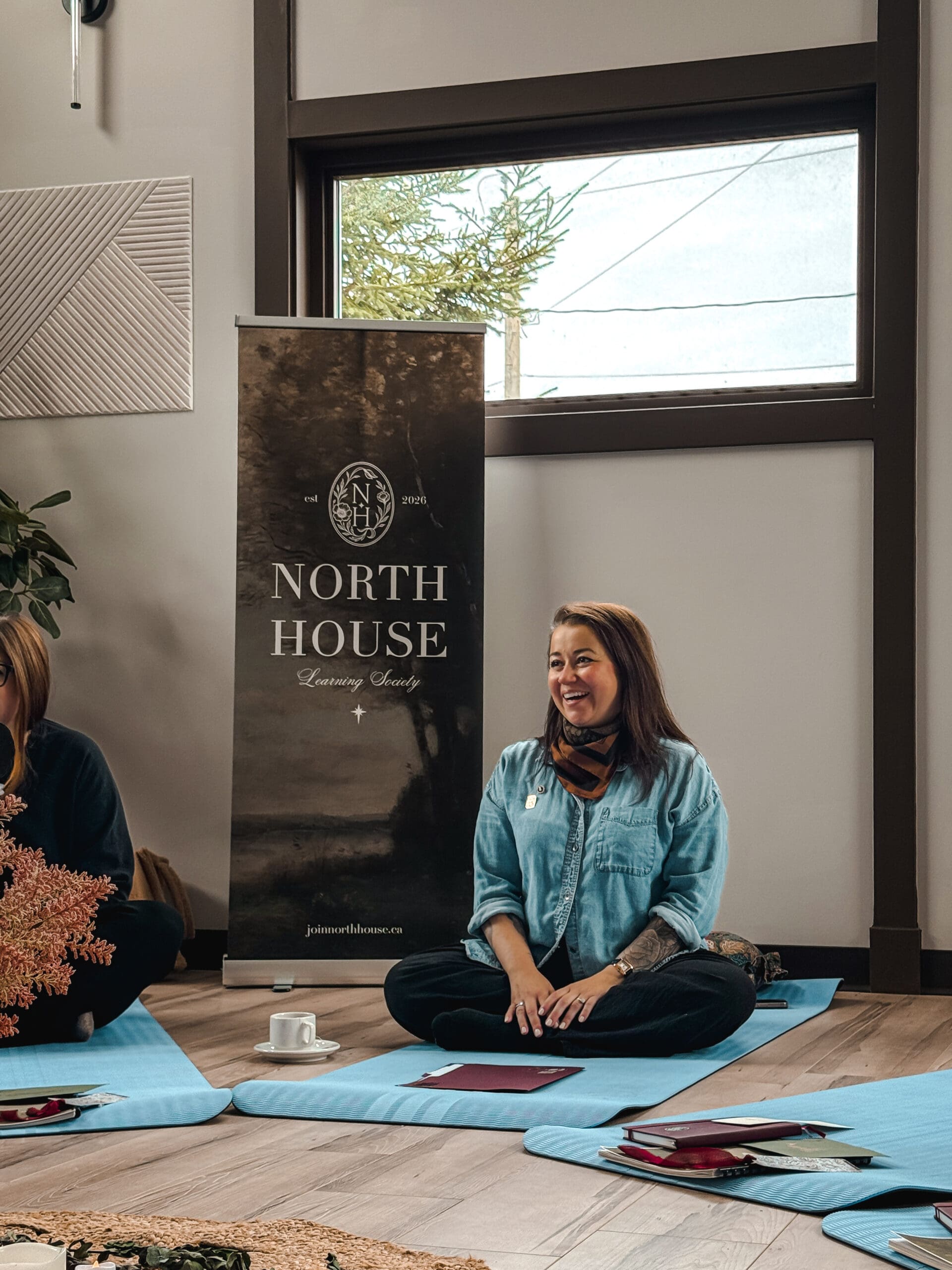
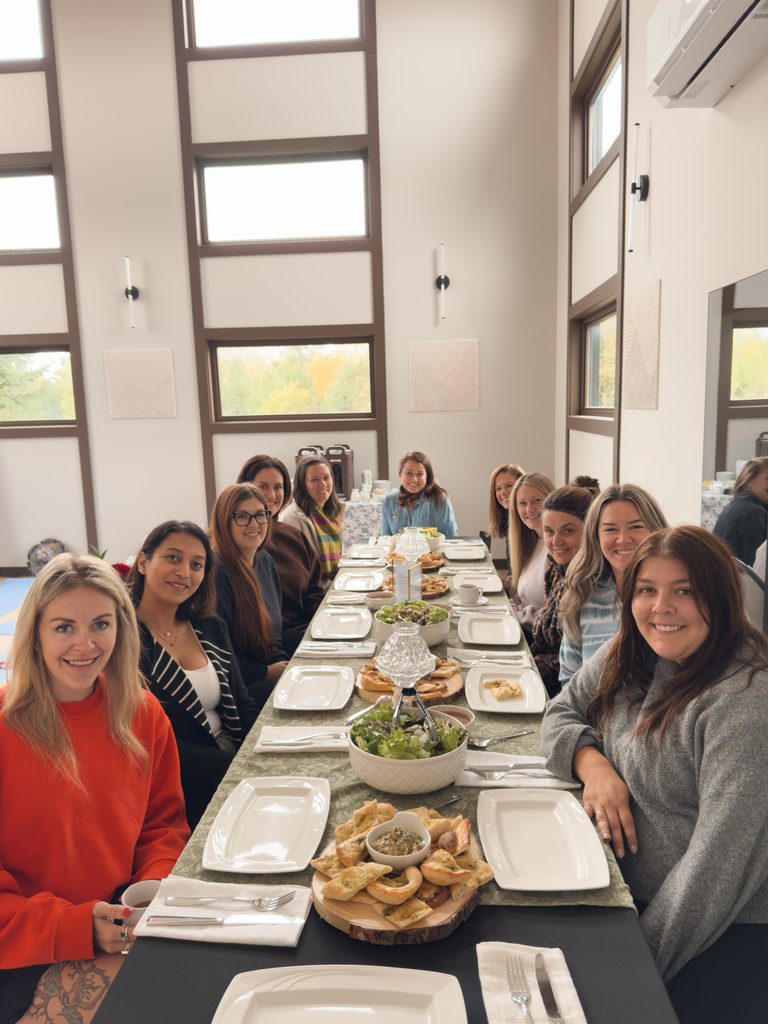
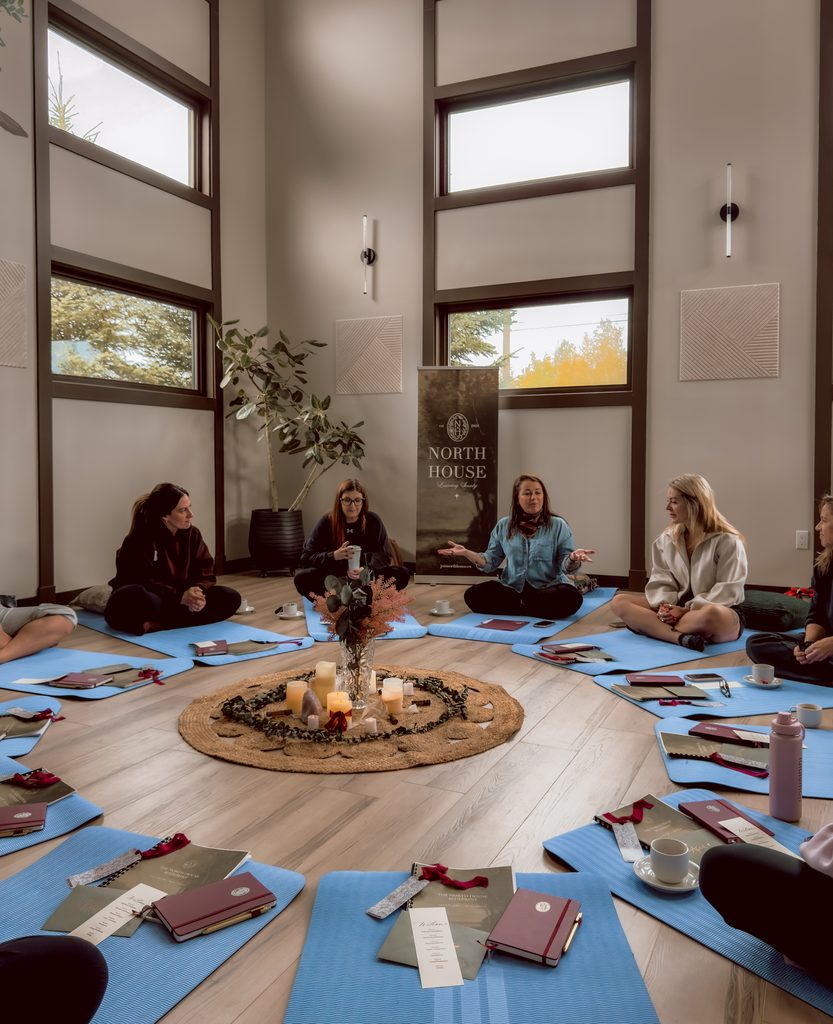
I felt this strongly at our first North House gathering. There were women sitting together, talking about self-love and self-knowledge, sharing experiences, asking questions, moving, reading, eating, laughing, reflecting. None of the conversations were particularly dramatic, and that may have been what made them so meaningful. People were simply being curious about themselves and about one another. I remember looking around the room and realizing how badly people want places where they can do that. Most people really do want to understand themselves. Most people really do want to help one another. When you bring people into the right room and give them permission to speak honestly, you can feel something change.
I often describe that change as energy because that is what it feels like to me. You walk into some rooms depleted and somehow leave more alive. There is a kind of emotional exchange that happens almost without our noticing. Laughter becomes easier in a room where other people are laughing, and vulnerability has a way of inviting more honesty. Sometimes another woman gives words to something you have quietly carried for years, and simply hearing it spoken aloud can make you feel less alone in it. Our emotional lives are not nearly as private as we sometimes pretend they are. We affect one another, and there is science underneath at least part of that experience. Researchers studying what is often called social buffering have found that social support can influence how our brains and bodies respond to stress, including neural threat responses, the autonomic nervous system, cortisol, and other stress-related systems. I may call some of it energy; a scientist may choose different language. Either way, I think most of us recognize the experience of becoming calmer, braver, happier, or more ourselves simply because of the people around us.
The Rooms We Lost
Perhaps the pandemic made this easier to see because so many of us experienced its opposite at the same time. During COVID, I felt more blue and significantly more anxious. I also went down more internet rabbit holes than I’m comfortable admitting. I was constantly checking the news, reading completely different opinions about the same thing, and trying to make sense of it all. Every answer seemed to create five more questions, and instead of actually sitting with what I was feeling, I just kept consuming more information. Looking back, I don’t think I was the only one doing this.
Many of us were physically separated from the people with whom we would normally have processed uncertainty. We lost conversations at kitchen tables, casual exchanges with coworkers, dinners with friends, visits with parents, community events, children’s activities, and all the ordinary little moments through which we make sense of our lives together. We still had information, perhaps more information than any generation in human history could have imagined having during a crisis, but information and understanding are not the same thing. Sometimes too much is remarkably similar to not enough.
Human beings have always learned socially. Knowledge did not begin with a search bar. We learned from parents and grandparents, teachers and neighbours, books and researchers, craftspeople and elders, religious communities, clubs, societies, workplaces, arguments, mistakes, stories, apprenticeships, and one another’s experience. Someone told you what she knew, you asked why, someone else disagreed, another person remembered something relevant, and eventually a more complicated picture began to form. We did not simply receive information; we participated in its meaning.
Technology has given us access to an extraordinary amount of knowledge, and I have no interest in romanticizing a world in which information was harder to obtain. I love having libraries in my pocket. I love being able to discover an obscure subject at breakfast and be three books deep in it by dinner. But I wonder whether somewhere in the transition from information being scarce to information being endless, we confused access to knowledge with the process of learning.
Increasingly, we experience the world through other people’s experiences on our phones. So much of life now reaches us through someone else’s lens. We watch people travel, raise children, build relationships, navigate illness, form opinions, read books and interpret research, often before we have had the chance to experience or examine those things for ourselves. We are given constant access to thousands of lives, but sometimes I wonder whether that has come at the expense of being deeply known within our own.
Too Much Is Like Not Enough
I think this has created a peculiar problem with trust. Social platforms place experts, genuine specialists, gifted communicators, enthusiastic amateurs, salespeople, provocateurs, conspiracy theorists and people who learned about a subject yesterday into essentially the same visual container. Everyone has a square, a caption, a microphone and an opinion. The systems distributing that information are built around attention, and confidence travels very well through an attention economy. Nuance rarely fits as neatly into a thirty-second video.
The Reuters Institute has documented the continuing shift of news consumption toward social and video platforms and describes an increasingly fragmented information environment filled with podcasters, creators, personalities and influencers alongside traditional journalism. Its 2025 research also found that overall trust in news remained relatively low, while audiences expressed particular concerns about accuracy, transparency and trust as AI becomes more involved in information production. (reutersinstitute.politics.ox.ac.uk)That research does not prove that we trust one another less because we gather less, but I cannot help wondering whether the two belong in the same conversation.
When you receive information from someone sitting across a table, there are things available to you that disappear online. You can ask what they mean, how they know & you can hear hesitation. You can challenge an assumption without necessarily rejecting the entire person. Someone else can introduce a perspective neither of you had considered. You can discover that two ideas that appeared contradictory on paper can both contain something true. Conversation creates friction, but good friction is useful. It makes us articulate our reasoning rather than simply announcing our conclusion.
I worry that we are exercising that muscle less often. We receive information, react, search quickly to see what everyone else thinks about it, choose an interpretation, and move to the next piece of information before we have had time to form a hypothesis of our own. I catch myself doing this sometimes. Something happens and, instead of first asking What do I think? What could explain this? What information am I missing?, I reach for my phone and begin collecting other people’s conclusions.
Critical thinking does not mean distrusting everything. In fact, I think constant distrust can become just as intellectually lazy as constant belief. Critical thinking requires enough patience to remain uncertain while we investigate. It asks us to distinguish evidence from interpretation, expertise from confidence, experience from universal truth, and disagreement from danger. It also asks us to change our minds occasionally, which is much easier in a conversation than in a culture where every opinion becomes a permanent public declaration.
This may be part of what we have forgotten: the art of conversation. Not talking, necessarily. We have never produced more words. I mean conversation in its older sense, an exchange in which neither person knows exactly where they will end up when they begin. A conversation has room for why. A good conversation gives us permission to pause, reconsider, ask another question, or admit that someone else has made us see something differently. It does not need to end with one person being right and the other being wrong.
Community Is Medicine
The more I read about health and longevity, the harder it becomes to dismiss community as a sentimental idea. The World Health Organization’s 2025 report on social connection estimates that roughly one in six people globally experiences loneliness and describes social isolation and loneliness as important risks to mental and physical health, including associations with depression, anxiety, cardiovascular disease and premature mortality.
Long before that report, researchers combined data from 148 studies involving more than 300,000 people and found that people with stronger social relationships had substantially better survival outcomes over time. The authors reported approximately a 50 percent greater likelihood of survival among people with stronger social relationships, although studies differed considerably and, as with this kind of evidence, association should not be reduced to a simple promise that friendship adds a prescribed number of years to anyone’s life. (PMC) Still, taken alongside the larger body of evidence, it becomes difficult to talk seriously about longevity while treating relationships as optional.
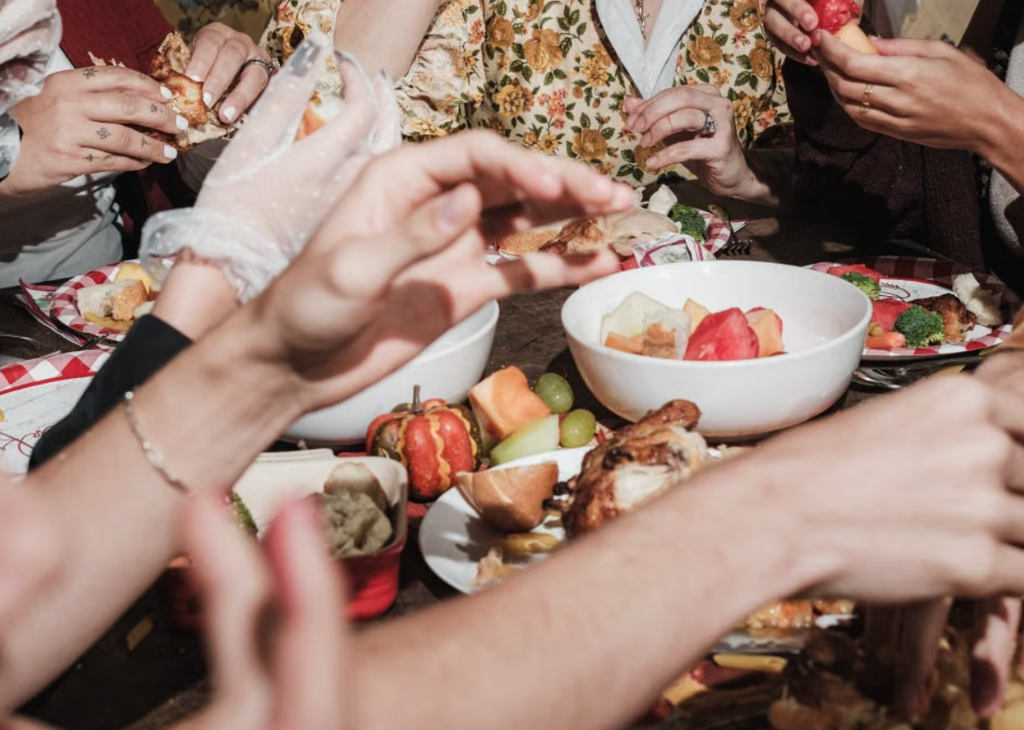
This is what I mean when I say that community is medicine. I do not mean medicine as a replacement for doctors, treatment or mental-health care. I mean medicine in the older and broader sense of something that sustains us. We laugh and cry together, and sometimes we borrow courage from one another without even realizing it. Other people can widen our perspective when our own thinking has become too narrow, and being part of a community reminds us that we matter to people beyond ourselves, that our presence, choices, and experiences can make a difference in someone else’s life.
I think that last part matters enormously. We hear a great deal about independence, boundaries, optimization and becoming completely self-sufficient. Some of that has been necessary and liberating, particularly for women who were historically expected to disappear into service to everyone around them. But I wonder whether we have occasionally mistaken healthy autonomy for needing nobody. The modern push toward hyper-independence can leave us exhausted, responsible for meeting every emotional, practical and existential need entirely by ourselves.
Human beings were never meant to be self-contained systems.
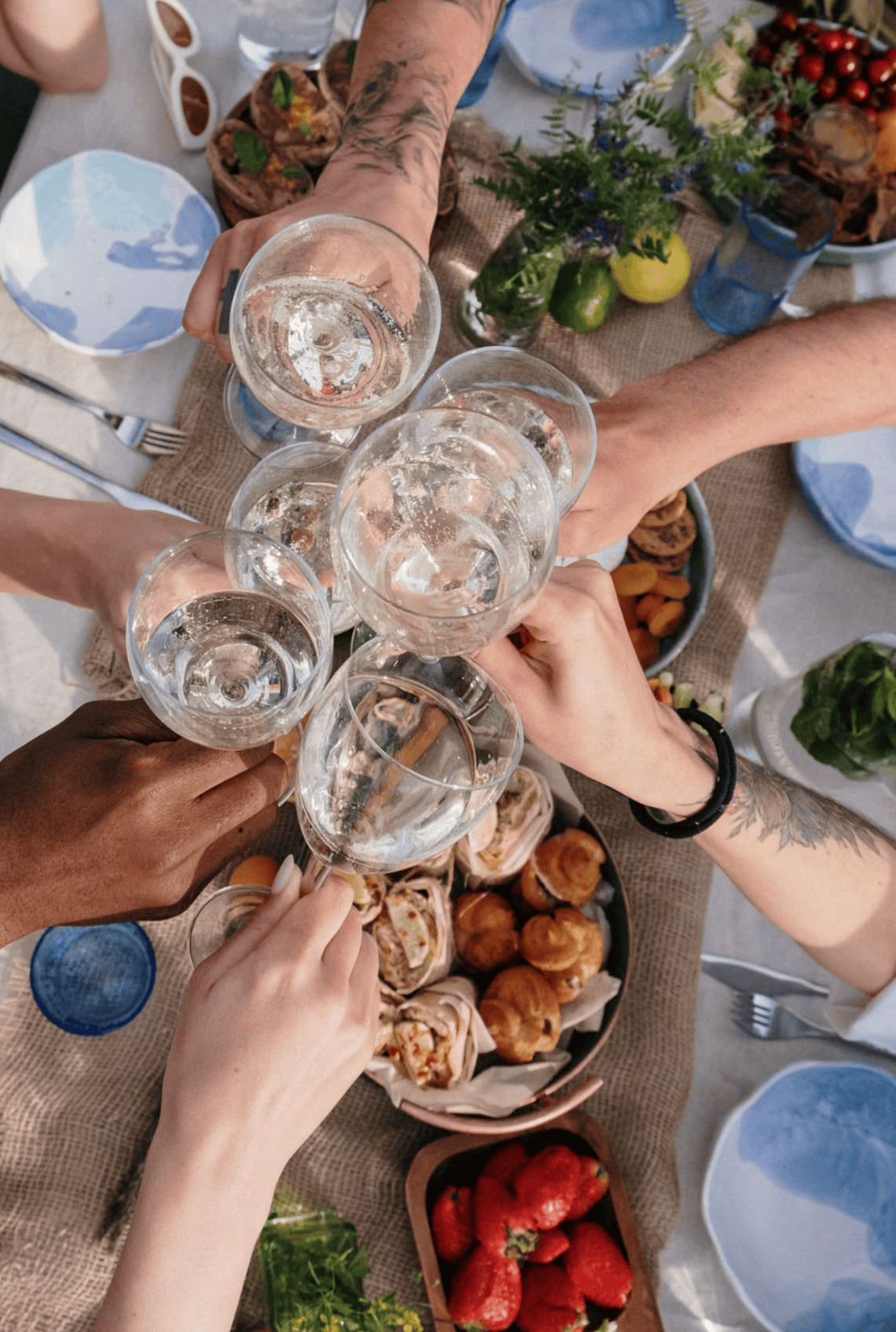
Even the introvert who tells me she does not need community makes me wonder whether perhaps she simply has not found her room yet. Community does not require being surrounded by people constantly. It does not have to mean a packed social calendar or constant interaction. It can be a small book club that meets once a month, neighbours who notice when something is wrong, a walking group, a church, a supper club, a volunteer organization, a classroom, a group of mothers, or simply a few people brought together by the same strange interest. What matters is not how many people are in the room, but whether you feel known, welcomed, and part of something beyond yourself. Community is not necessarily quantity. It is the experience of being known, contributing something, and recognizing that you belong somewhere beyond yourself.

What Technology Cannot Replace
This feels increasingly important to me because technology is accelerating so quickly. Let me say first that I love technology. I use it constantly, and I am fascinated by what it allows us to do. Efficiency & access to information is useful. AI will undoubtedly make many forms of knowledge easier and faster to obtain. But the more efficient our tools become at giving us answers, the more valuable I think the human experiences that cannot be reduced to answers will become.
A machine can summarize a book for me, but it cannot replace sitting at a table with someone who read the same book and was changed by an entirely different sentence. It can generate possibilities, organize information and challenge an argument, but it does not need me. Human beings do. We need to feel useful to one another. We need to know that our presence changes a room, that someone notices when we are absent, that an experience we lived through might help another person, that we have something to contribute besides productivity.
I worry that in the name of efficiency we could accidentally remove too much friction from being human. We might optimize away the conversations that take too long, the gatherings that require driving across town, the elderly neighbour whose story you have already heard, the friend whose problem cannot be solved in three bullet points, the community meeting where people disagree for an hour before understanding one another slightly better. None of these things is efficient, and that may be precisely why they matter.
Online communities can be meaningful, and I would never dismiss the relationships people build there. The internet has allowed people who once felt profoundly alone to find others who understand them. It has made extraordinary forms of learning and belonging possible across geography. But I do not want digital connection to become a complete substitute for physical presence. There is still something about sharing a room, a table, a meal, a silence, a laugh, an idea… We experience one another with more than language. Maybe the future will require us to become much more intentional about protecting that.
I think we will need places whose primary purpose is simply to gather people around things worth caring about. Libraries, gardens, societies, kitchens, workshops, book clubs, neighbourhood traditions… Places where people can disagree without becoming enemies and ask questions without being embarrassed that they do not already know the answer. Places where knowledge is exchanged rather than merely consumed.
That is why community was never an optional addition to North House for me. North House is a learning society because I do not believe we learn only by being taught. We learn so much when other people bring something into the room that we could not have arrived at alone. Someone shares an experience that challenges what we thought we knew, another person asks the question we had been afraid to voice, and suddenly our certainty has to make room for someone else’s reality. That is where curiosity becomes useful, because a safe room gives us permission to rethink rather than defend.
I want North House to be that room.
Helen Keller’s words feel increasingly relevant to me: “Alone we can do so little; together we can do so much.” Perhaps our challenge now is not simply to become better connected technologically. We have accomplished that beyond anything previous generations could have imagined. The challenge may be remembering how to belong to one another while we are connected to everyone.
I have come to believe that community really is a kind of medicine. Conversation helps us think more clearly, and the right people can make us feel steadier, more open, and more like ourselves. There is something deeply human about being in a room where you feel safe enough to speak honestly and curious enough to listen. Most of all, I believe that as technology becomes faster, smarter and more capable, gathering around a table may become one of the most important human things we choose to preserve.

